-01.svg)


It's easy therefore to assume the Handschalter is a simple copy and paste of 2023's M3 CS equipped with xDrive and an eight-speed auto. But there is far more to it than that, with weight, weight distribution and power all changing due to the transmission, forcing BMW to revise the entire dynamic package.
Limited by the clutch, the CS Handschalter's output is reduced to standard M3 levels, meaning 473bhp and 406lb-ft of torque. That's a sacrifice of 50bhp and 73lb-ft – not exactly pocket change. The loss of the front driveshafts, however, means less weight. Official kerb weight is yet to be disclosed, though given the Handschalter comes with the same carbon panels as before – and the same absence of cupholders – BMW has published a saving of 19kg over the standard manual M3, rising to 34kg with the optional carbon-ceramic brakes. Taking the standard manual M3's 1,719kg kerb weight as a baseline, that would put the 2027 CS around 91kg below its xDrive predecessor.


Predictably, removing all-wheel drive traction from the equation, diluting power and relying on a human to change gears hurts the numbers. 0-60mph takes 4.1 seconds (or 3.8 seconds inclusive of 1ft roll-out) and the top speed is 180mph – putting the Handschalter 0.7 seconds and 8mph shy of the xDrive CS. But straight-line speed is hardly the point of the car.
Handling is. With the focus on sending all the power to the rear wheels, the Handschalter benefits from bespoke software tuning for the steering, suspension, throttle, differential settings and stability control. The hardware has been revised too: only two major hardware components have carried over unchanged – the anti-roll bars and the adaptive dampers, the latter lifted off the M4 CSL – alongside custom camber and geometry. New springs and a revised rear axle link are responsible for the 6mm reduction in ride height over the standard M3. Factor in all of the above, and it's little wonder the Handschalter has taken three years to develop.
Three tyre options are available: an extreme performance tyre in the form of the Pirelli P-Zero Corsa, and two flavours of Michelin Pilot Sport Cup 2, with the 2R a $600 optional extra. Dimensions are 275/35ZR19 up front, and 285/30ZR20 at the rear. M Compound steel brakes are standard, with a choice of red or black calipers. Carbon-ceramic brakes reside on the options list, once again offering two finishes – the traditional gold or gloss red. Given the already gold wheels, the latter seems the obvious choice.
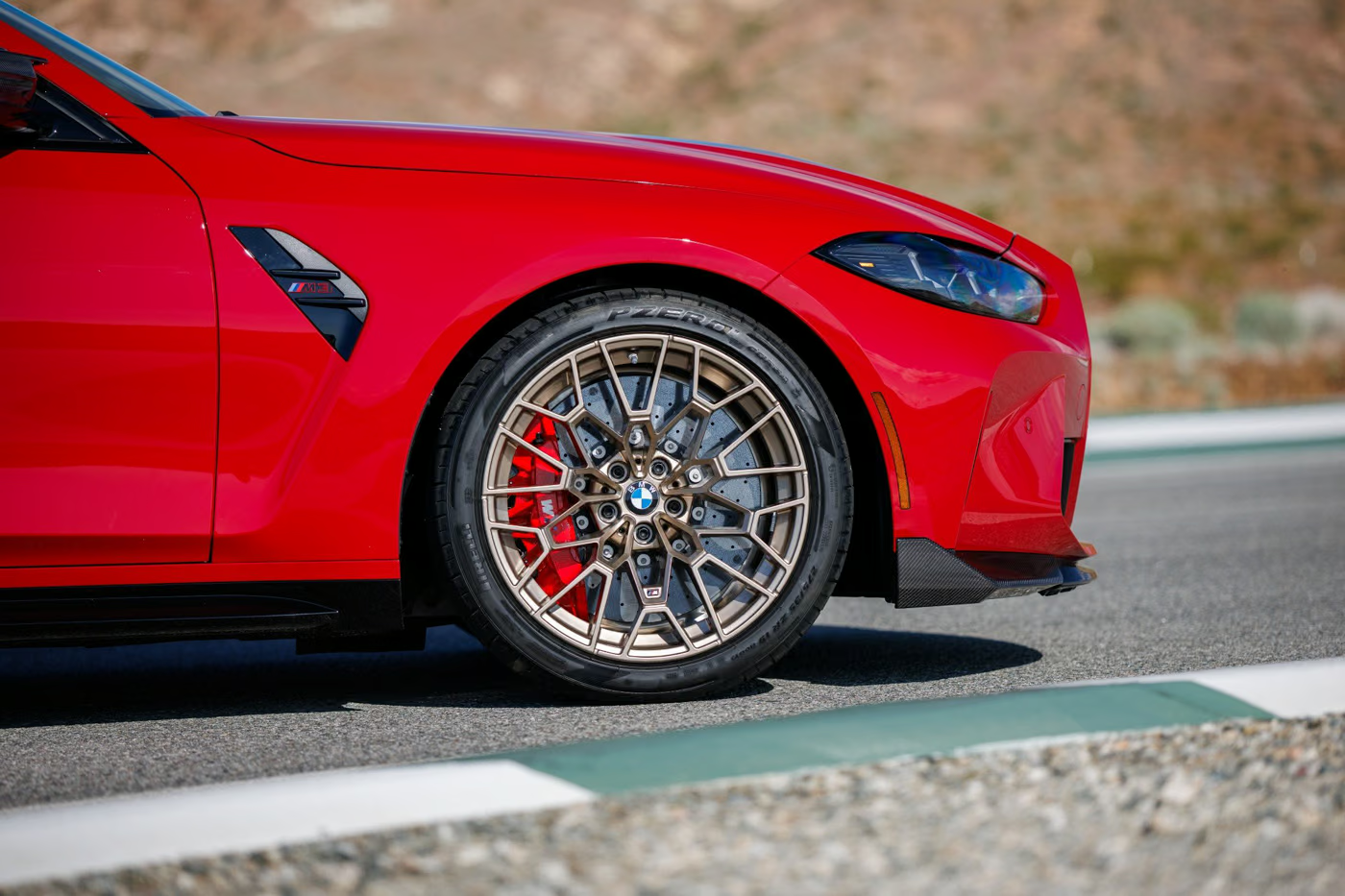

An Akrapovic titanium rear silencer is standard, accounting for a modest 3.5kg of the overall saving, but carries far more weight in terms of soundtrack. Besides the optional carbon-ceramic brakes – priced around $8,500 on the standard US-market M3 – another must-have is the $1,100 strut brace. Apart from the obvious handling benefit, the aluminium item gives the engine bay some much-needed visual theatre.
The Handschalter gains CS-specific styling features to mark it out from the standard M3 and Competition models, with red detailing around the grille and yellow GT3-esque daytime running lights. Exposed carbon fibre is found across the bonnet, air intakes, front splitter, roof, mirrors, and rear diffuser. Forged wheels are available in gold or matte black, and four colours are available. Three are taken from the heritage collection – Imola Red, Techno Violet, Black Sapphire metallic – alongside the contemporary Isle of Man Green.

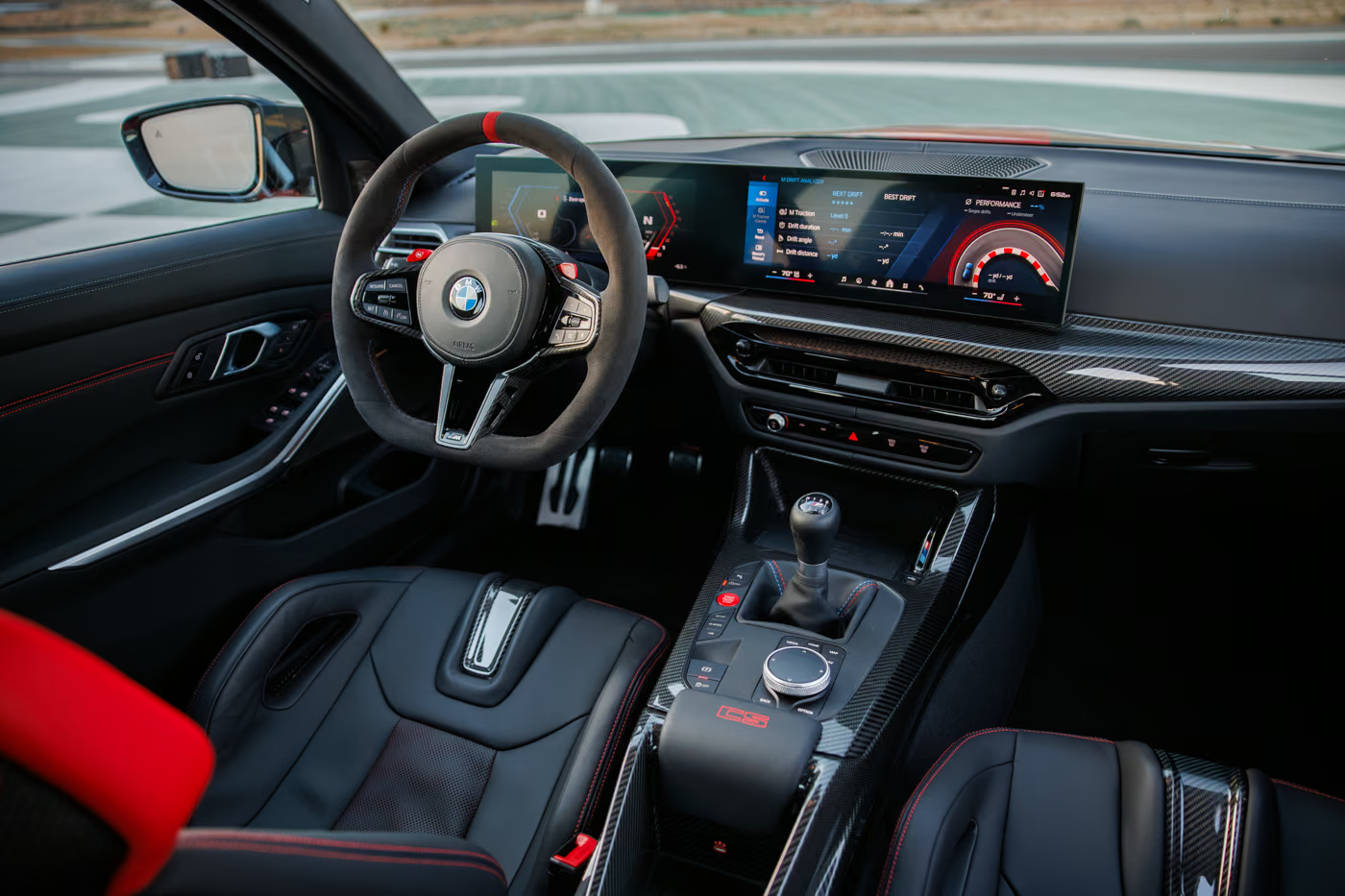
Inside, what you see is what you get, meaning M Carbon Bucket Seats trimmed in Merino leather, gloss carbon fibre for the centre console and transmission tunnel, and a heated Alcantara steering wheel. M Drive Professional is standard, bringing ten-stage traction control, a drift analyser, lap timer and an additional M Track mode that mutes driver aids and simplifies the driver's display. Switchable rev matching is assured too, tied to the status of the stability control.
The M3 CS Handschalter will cost from $108,450 USD including $1,350 destination. Production begins in July, and the order books open now. To save UK readers from reaching for a calculator, and to make them cry, that's roughly £80,806 at the time of writing – over £10,000 less than the starting price of the regular xDrive M3. Forty cars will also be sold in the Canadian market, beginning at $132,500 CAD.
While it's enticing to think the G80 M3 CS Handschalter could be the catalyst for a new dynasty of manual M cars, timing is against the format rolling out to the M4, M3 Touring – production of the G8X series is due to end in February 2027. The odds may be more favourable when it comes to the M2 CS. And if that does happen, given an M2 with three pedals remains on sale in the UK, an M2 CS Handschalter might just follow. Here's hoping.

.avif)
.jpg)

.svg)

