-01.svg)
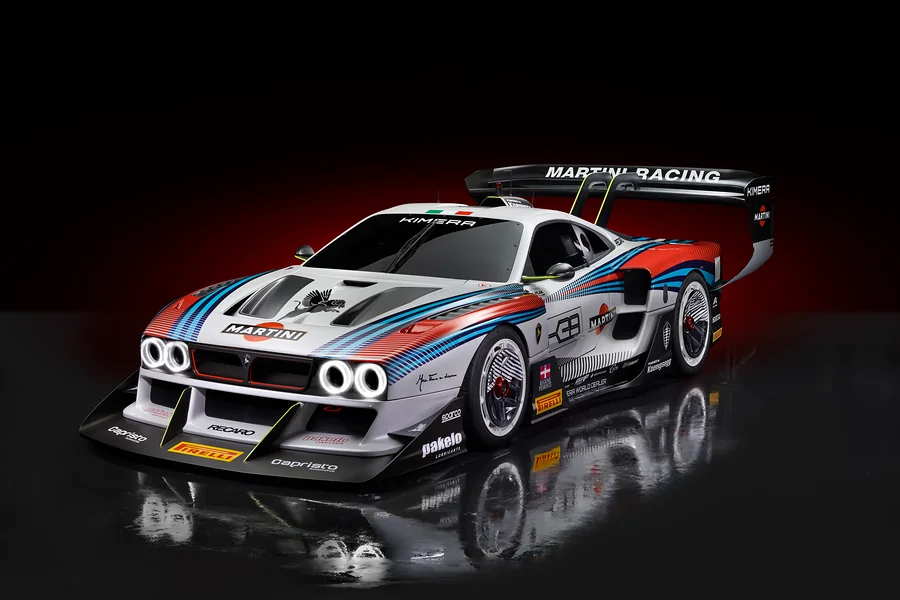

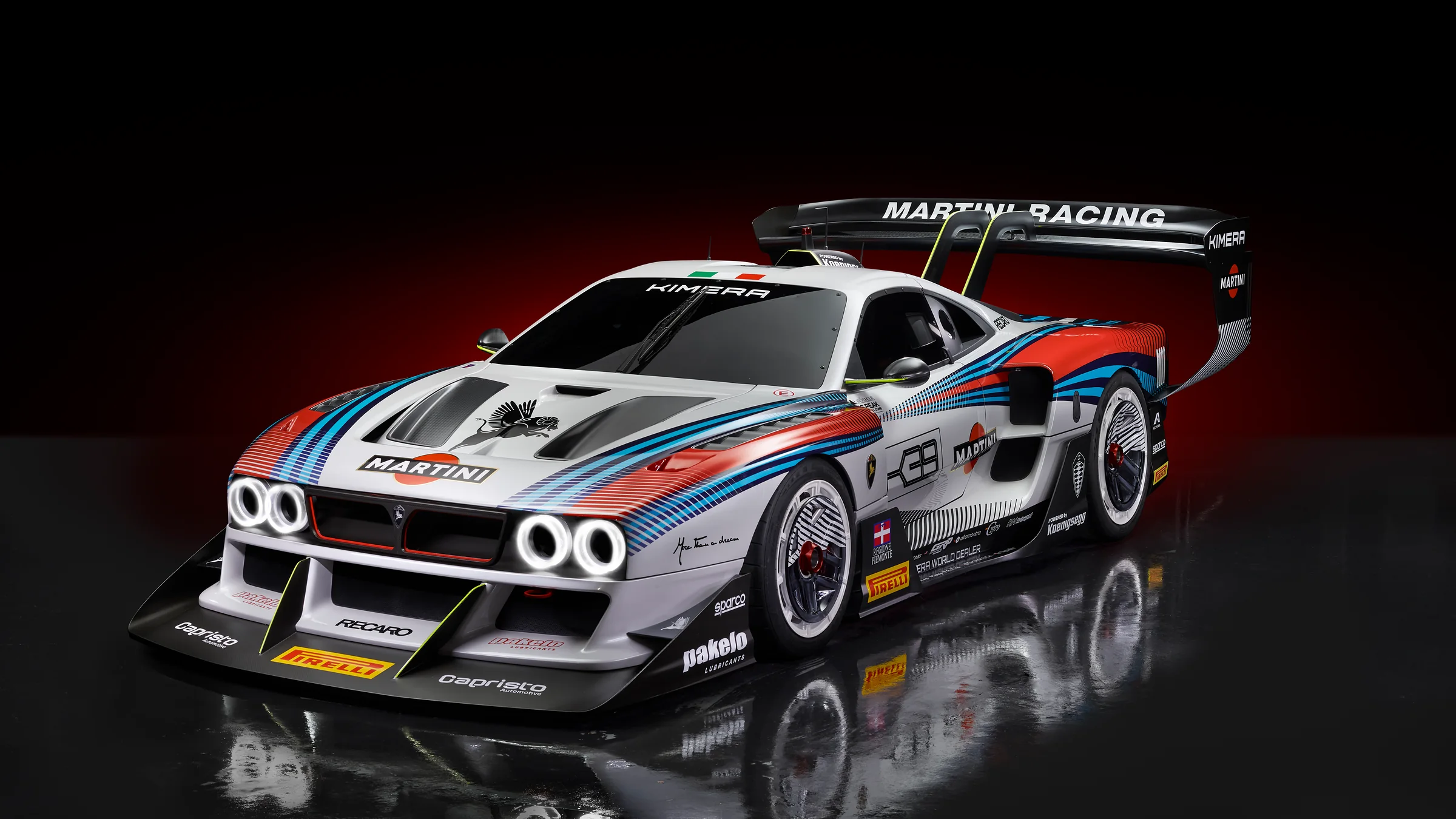
Not that you’d know it from first impressions. Drawing inspiration from the Beta Montecarlo Turbo – Lancia’s endurance racer of the late 1970s and early 1980s – the K-39 sits in seamless visual continuity with the EVO37 and EVO38. Beneath however, lies a 986bhp V8 courtesy of Koenigsegg, a carbon fibre monocoque, and aerodynamic refinements developed with the guiding hand of Dallara.
Few saw the Koenigsegg collaboration coming. The K-39 has been teased on several occasions over the past twelve months, but the Swedes’ involvement has been kept under wraps until now. Koenigsegg’s entire philosophy is built around extracting every last horsepower from a combustion engine. Kimera’s, however, is built around how a car makes its driver feel. Yet the two appear to be natural bedfellows, with Koenigsegg supplying a bespoke twin-turbo V8 that trades outright power for throttle response, aided by new, lighter turbochargers.
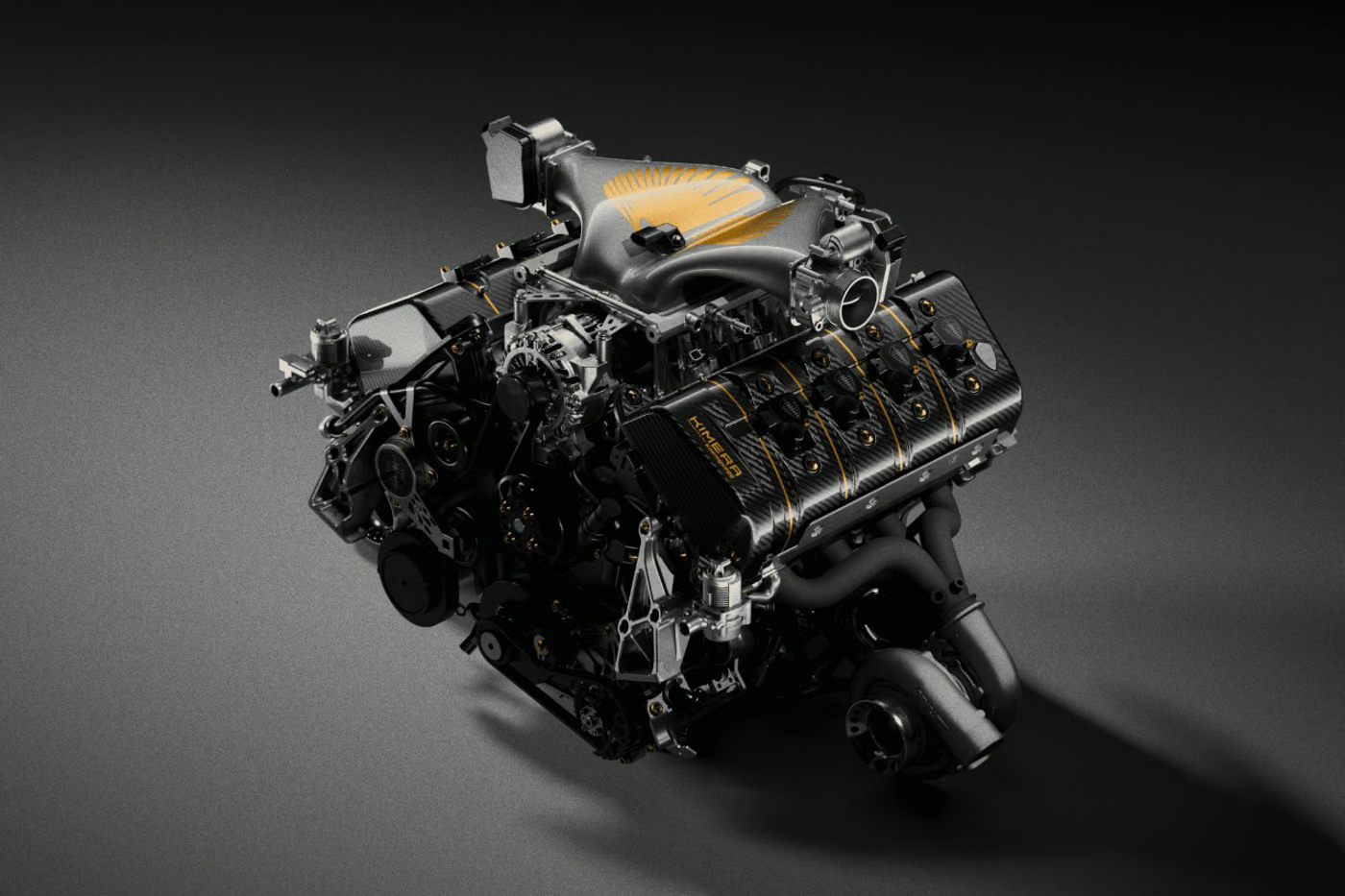
The 5.0-litre unit draws on architecture from the Jesko, though with unique components throughout – including an exhaust system derived from the Agera range – culminating in 986bhp at 7,350rpm and 885lb ft at 5,500rpm. Kimera says the decision to upgrade to V8 power was inspired by the later LC2, Lancia’s answer to the Porsche 956.
Despite the EVO38 graduating to all-wheel drive, Kimera has chosen to send all of that power to the rear wheels via a seven-speed manual gearbox, with a sequential transmission in development. Such purity allows the fledgling manufacturer to target a kerb weight of 1,100kg – the same as the EVO38, despite carrying an additional 400bhp.
The suspension follows the same inboard pushrod arrangement front and rear as the EVO38 – a setup more commonly associated with racing cars than road cars. Brakes are steel as standard, a deliberate move according to Kimera as the material offers better feedback than carbon ceramics, although those are in the pipeline, as are magnesium wheels. For now, the K-39 rides on forged aluminium wheels – 20-inch at the front, 21-inch at the rear – wrapped in Pirelli P Zero Trofeo RS tyres.
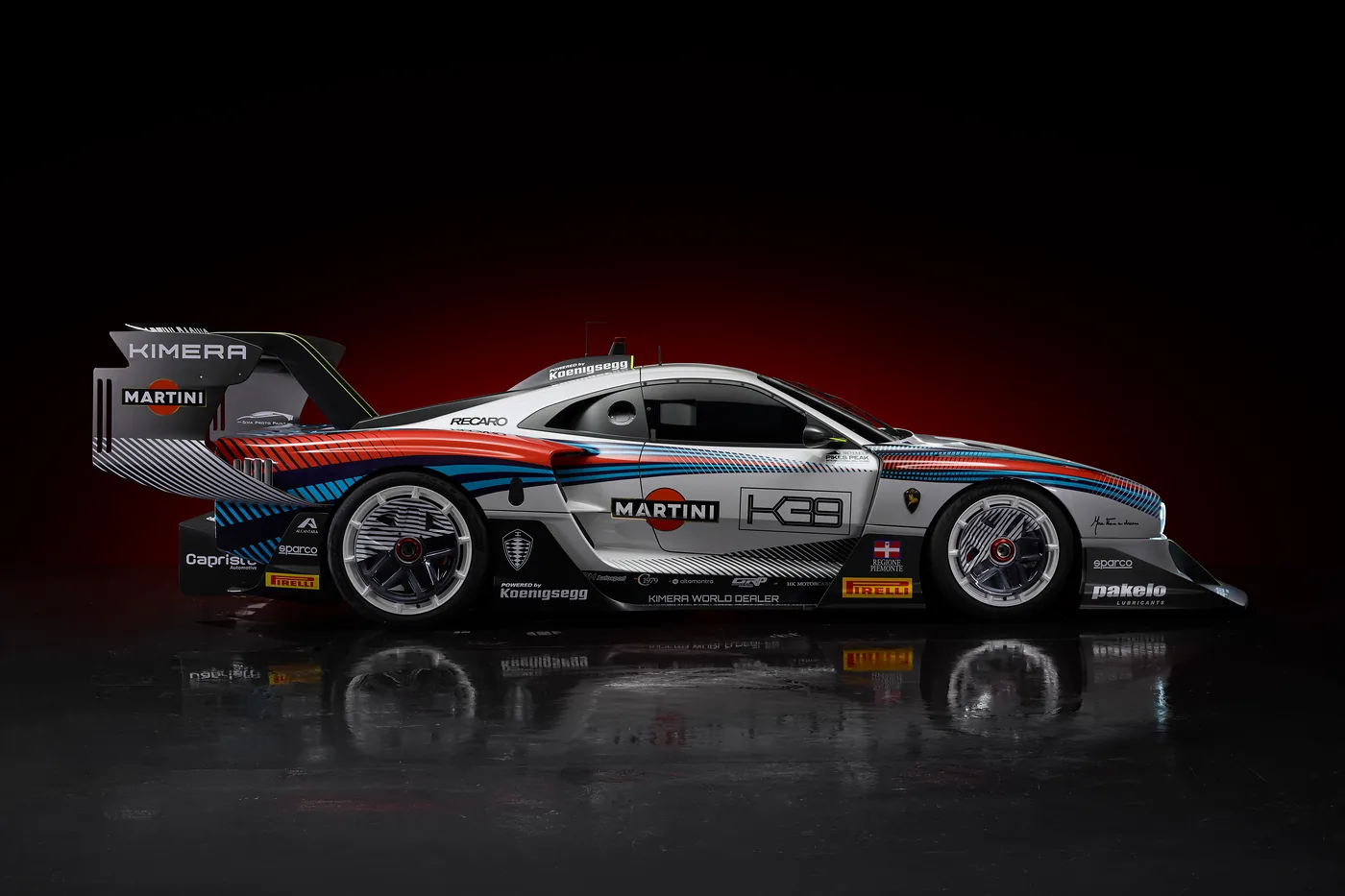
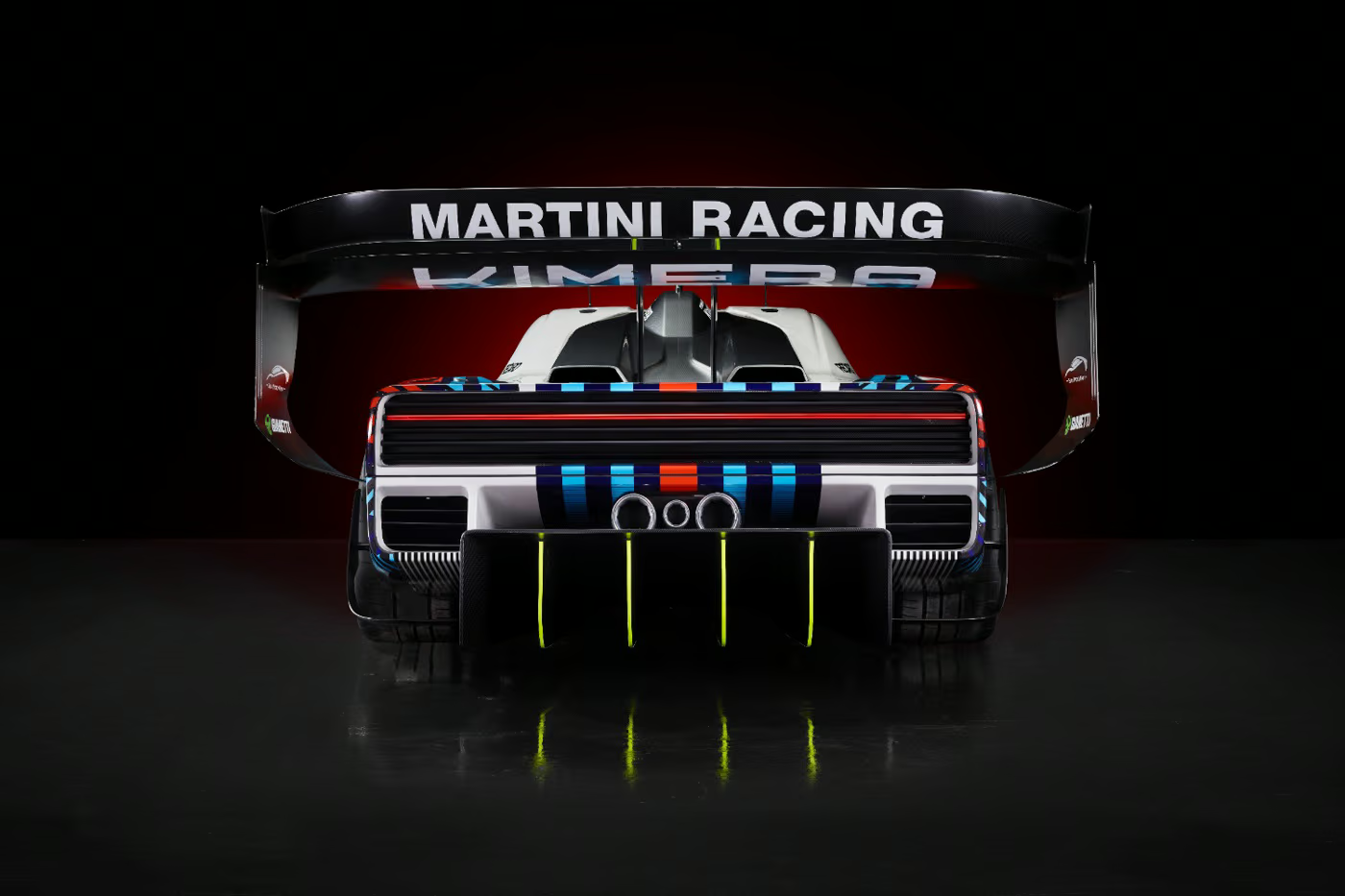
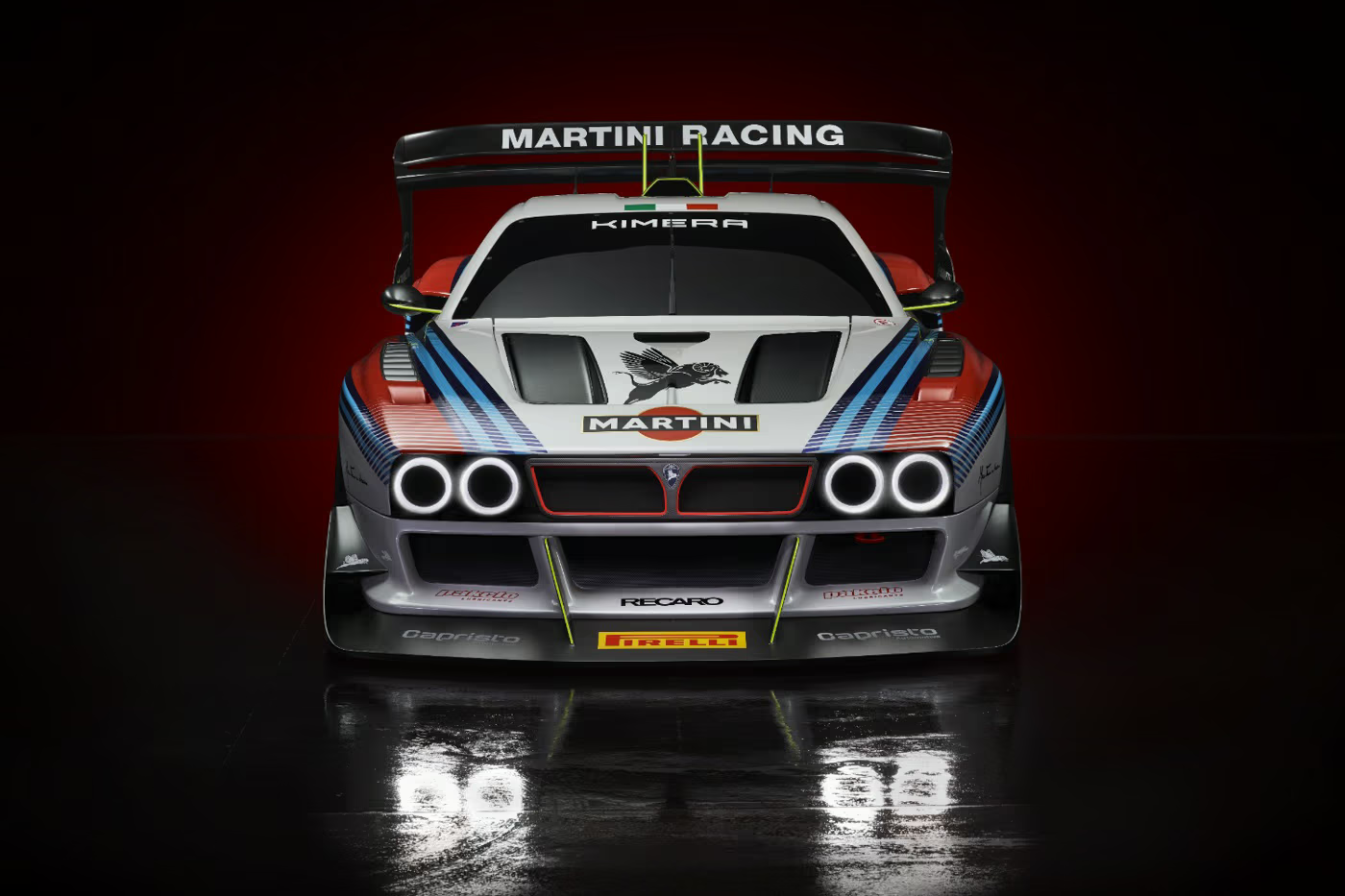
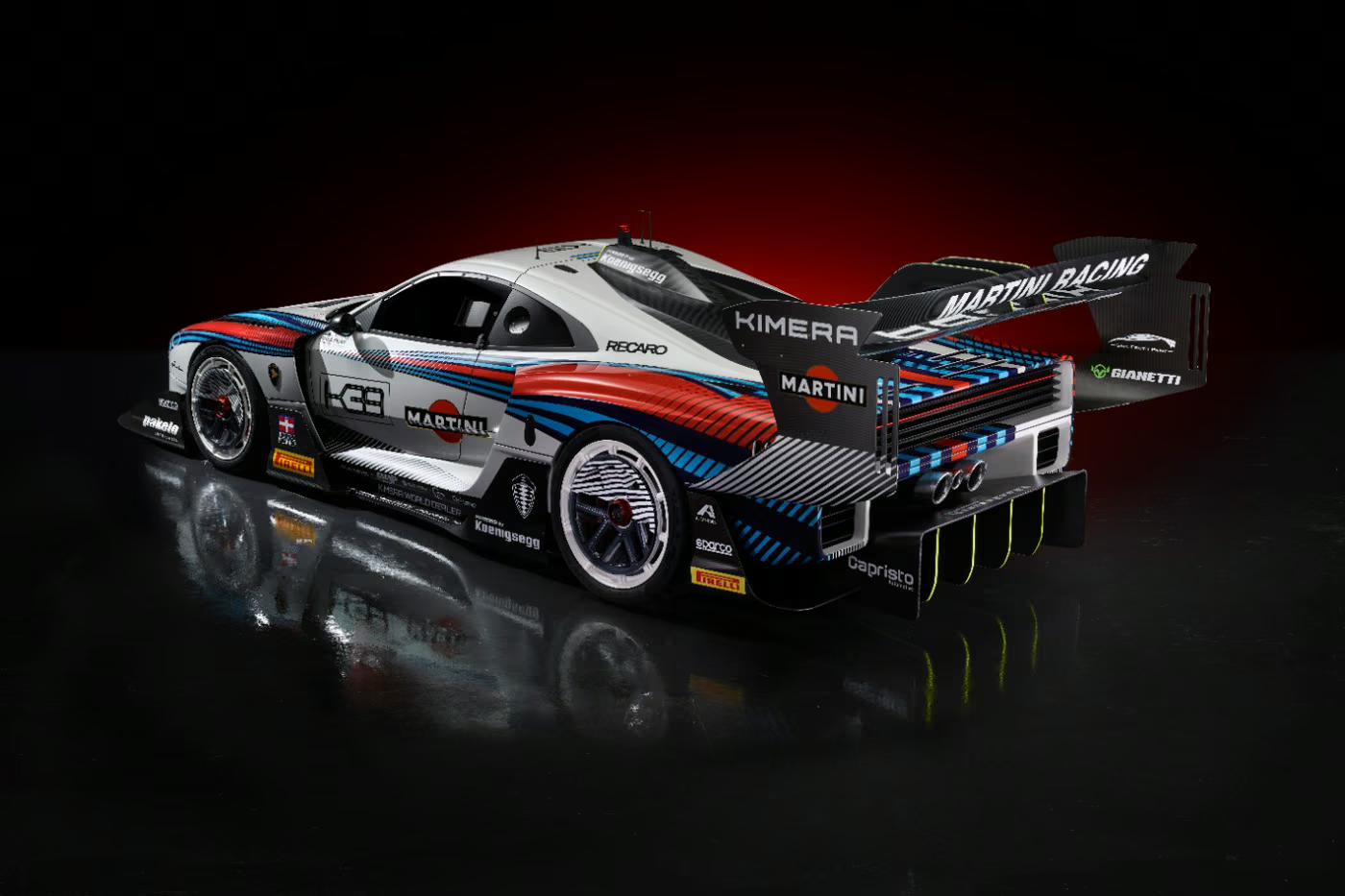
Kimera has shown the K-39 in two distinct forms: Stradale and a “special Pikes Peak configuration”. Both are bona fide jaw-droppers, but the Pikes Peak car will certainly steal the headlines with its outlandish aero kit and Martini Racing livery. The front end wears its Beta Montecarlo influence openly, with four circular headlights set above a snow-plough-spec splitter. The side profile, though, is where the aero kit truly takes over, the roofline dropping dramatically into the tail, an oversized wing rising behind it with the kind of swagger that could only belong to a car of The Mountain.
The rear is almost brutal with its full-width extraction panel, vertical louvres cutting into the bodywork, and three central exhaust outlets that can’t decide if they’re afterburners or rocket launchers. Unlike the recent trend for track-dedicated hypercars, the aero kit is not a permanent fixture, allowing owners to preserve the car’s road-legal status when desired.
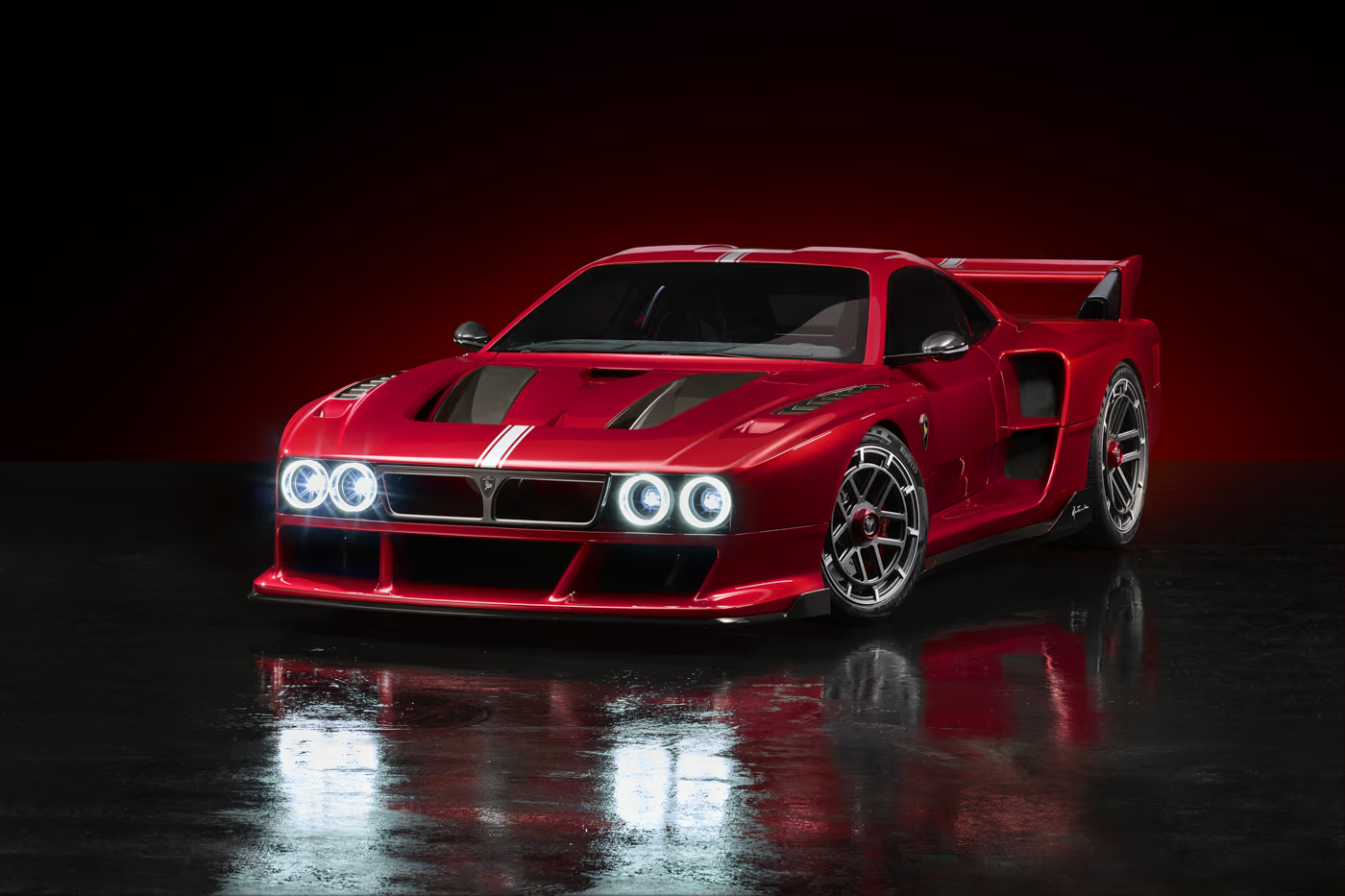
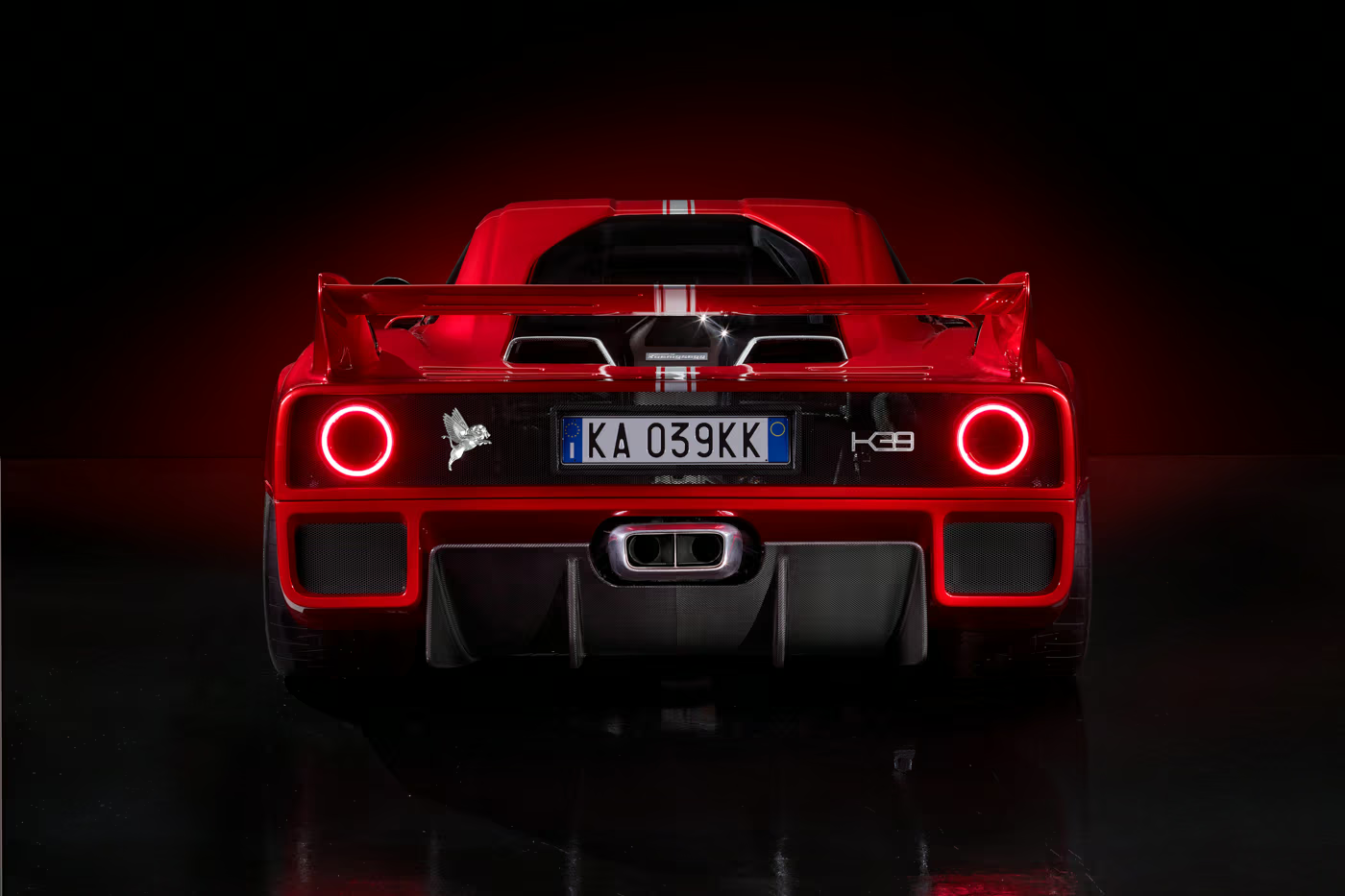
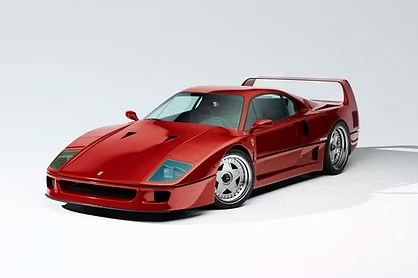
The K-39 Stradale fuses a second influence in its bodywork, particularly around the rear. Kimera founder and CEO Luca Betti is, by his own admission, an F40 obsessive, and the full-width mesh grille, shark gills, central exhaust and circular tail lamps make no apologies for their inspiration. At first glance, the hooped rear wing might suggest another F40 reference, but that is pure Montecarlo, carrying an intake on its strut to feed the oil intercooler directly, just like the original competition car. Up front, an S-duct routed up and over the bonnet generates additional downforce, while the outer lamps contain a particularly creative interpretation of pop-up headlights, rising from within the halos to fill in the blanks. One aspect of the K-39 still remains under wraps: the interior. Kimera promises we'll get a look in the near future, and the design will be faithful to the Montecarlo.
.avif)
Speaking to Top Gear, Betti maintains the driving experience is first and foremost: “I want to give a car to the world that represents a connection with something true – this smell of fuel, this kind of materials and feelings, to be in a ‘70s, ‘80s car. A real car.”
More than 20 cars were already spoken for before the K-39’s full reveal at Villa d’Este, despite unconfirmed pricing. The first ten builds are reserved for the Pikes Peak configuration, and Kimera plans to take a K-39 to Colorado next year in anger, giving genuine substance to the styling. A figure north of £2 million is anticipated once options and local taxes are accounted for, with first deliveries expected in 2027. Production numbers are yet to be formally announced beyond Kimera labelling them as ‘super limited’.
Betti also told Top Gear his goal for Kimera is to sit alongside Bugatti, Pagani and Koenigsegg, occupying the motorsport corner of the hypercar sphere. With the K-39 as an opening act, that ambition looks entirely credible.




.svg)

